Introduction
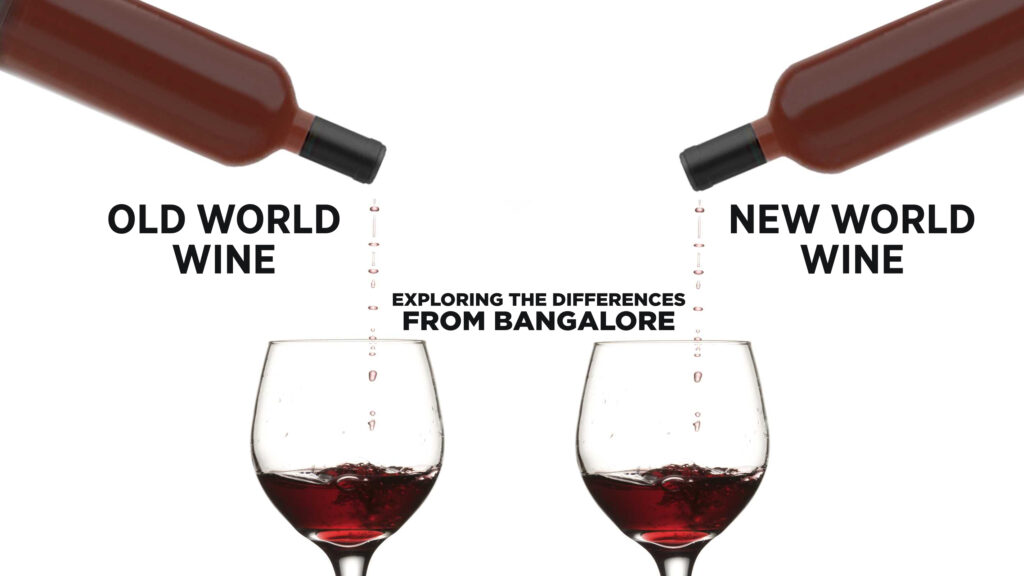
Hello, fellow wine lovers! I’m SVS, a wine enthusiast from the vibrant city of Bangalore. In the world of wines, there’s an ongoing conversation about Old World and New World wines. These terms might sound like a geography lesson, but they’re actually crucial in understanding the wine in your glass. Let’s uncork the differences between these two styles.
What Defines Old World and New World Wines?
Old World wines come from regions where winemaking (with Vitis vinifera grapes) first originated – think Europe and parts of the Mediterranean like France, Italy, Spain, and Germany.
New World wines, on the other hand, are from countries where winemaking was imported during and after the age of exploration – places like the USA, Australia, South Africa, and South America.
1. Terroir vs. Technique
Old World wines are deeply rooted in the concept of terroir – the idea that the wine’s character is largely defined by its environment including soil, climate, and topography. In contrast, New World wines often reflect more innovation and technological influence, with winemakers having more freedom to experiment.
2. Flavor Profiles
Generally, Old World wines are subtler and more balanced in flavor, with a lower alcohol content and higher acidity. They’re often described as tasting more like the place they come from. New
World wines tend to be fruitier, bolder, and higher in alcohol. They often have a more pronounced flavor of the grape itself.
3. Winemaking Traditions and Innovations
In the Old World, winemaking is steeped in tradition, with techniques passed down through generations. This tradition is often regulated by strict laws that dictate how wine can be made. In
the New World, there’s a sense of freedom and innovation in winemaking, allowing for more experimental and diverse approaches.
4. Bangalore’s Palette: A Blend of Both Worlds
Here in Bangalore, we’re fortunate to have access to both Old and New World wines. Our diverse culinary scene allows for endless pairing possibilities. From enjoying a classic French Bordeaux with a rich lamb curry to sipping a bold Australian Shiraz with a spicy Andhra-style chicken, the combinations are limitless.
5. Labeling and Naming
Old World wines are typically labeled by region (like Bordeaux or Chianti) while New World wines are often labeled by grape variety (like Cabernet Sauvignon or Merlot). This difference reflects the emphasis on terroir in the Old World versus the varietal in the New World.
Conclusion
Whether you lean towards the tradition-steeped vineyards of the Old World or the innovative expanse of the New World, there’s a vast world of wines waiting to be explored. As a wine lover
in Bangalore, I cherish the variety and the stories each bottle brings. So next time you raise a glass, think about whether it’s from the Old World or New World, and appreciate the journey it
has taken to reach you.
Cheers and happy tasting!
SVS, Wine Enthusiast from Bangalore
