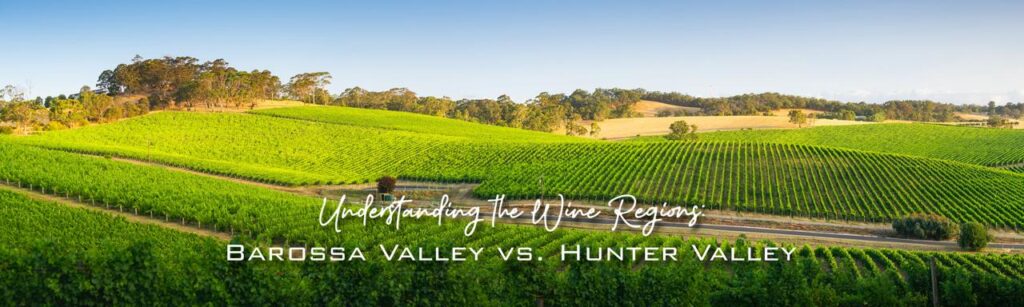
Australia’s vast landscape is home to some of the world’s most renowned wine regions, each with its own unique climate, soil, and winemaking traditions. Among these, Barossa Valley and Hunter Valley stand out as two of the most iconic. Both regions produce exceptional wines, but their distinct characteristics and styles offer wine enthusiasts a diverse tasting experience. Let’s delve into what makes Barossa Valley and Hunter Valley unique and explore the wines that define these celebrated regions.
Barossa Valley:
The Heart of Bold Reds
Location: South Australia
Climate: Mediterranean with warm summers and cool, wet winters
Famous For: Shiraz, Grenache, Cabernet Sauvignon
Terroir and Viticulture
Barossa Valley, located just northeast of Adelaide, is one of Australia’s oldest and most prestigious wine regions. The valley’s Mediterranean climate, with its hot, dry summers and cool winters, is ideal for growing robust red grape varieties. The diverse soils, ranging from sandy loam to clay, contribute to the rich complexity of Barossa wines.
Signature Wines
Shiraz: Barossa Valley Shiraz is legendary. These wines are typically full-bodied with intense flavors of dark fruits, such as blackberry and plum, complemented by notes of spice, chocolate, and vanilla. The region’s Shiraz often undergoes aging in American oak, adding a distinctive creamy texture and sweetness.
Grenache: Known for its vibrant red fruit flavors and soft tannins, Barossa Grenache is often used in blends or as a varietal wine. These wines can be both fresh and fruit-forward or rich and spicy, depending on the winemaking approach.
Cabernet Sauvignon: While Shiraz reigns supreme, Barossa Cabernet Sauvignon holds its own with structured tannins and deep flavors of blackcurrant, mint, and eucalyptus.
Winemaking Traditions
Barossa Valley is home to many historic wineries, some dating back to the mid-19th century. These wineries often blend traditional winemaking techniques with modern innovation, creating wines that honor the region’s heritage while appealing to contemporary palates. Key wineries to explore include Penfolds, Jacob’s Creek, and Henschke.
Wine Tourism
Barossa Valley offers a rich wine tourism experience with its scenic vineyards, charming cellar doors, and gourmet food offerings. Visitors can enjoy wine tastings, vineyard tours, and dining at world-class restaurants. The region’s vibrant festivals, such as the Barossa Vintage Festival, further enhance its appeal.
Hunter Valley:
The Pioneer of Australian Wine
Location: New South Wales
Climate: Subtropical with humid summers and mild winters
Famous For: Semillon, Chardonnay, Shiraz
Terroir and Viticulture
Hunter Valley, situated north of Sydney, is one of Australia’s oldest wine regions. The region’s sub-tropical climate, with its warm, humid summers and mild winters, presents unique viticultural challenges. However, the well-drained sandy and loamy soils provide excellent conditions for growing a variety of grape types.
Signature Wines
Semillon: Hunter Valley Semillon is world-renowned for its ability to age gracefully. Young Semillon is light and crisp with flavors of citrus and green apple. As it ages, it develops complex notes of honey, toast, and nuts, showcasing its remarkable transformation over time.
Chardonnay: The region’s Chardonnays range from crisp and unoaked to rich and buttery, often exhibiting flavors of peach, citrus, and melon. Hunter Valley Chardonnay is celebrated for its balance and finesse.
Shiraz: Unlike the bold Shiraz of Barossa, Hunter Valley Shiraz is generally medium-bodied with softer tannins and more delicate flavors of red berries, spice, and earth. These wines are elegant and nuanced, reflecting the region’s terroir.
Winemaking Traditions
Hunter Valley boasts a rich winemaking history, with some of Australia’s oldest continuously operating wineries, such as Tyrrell’s and Drayton’s. The region is known for its innovative winemakers who continue to push boundaries while respecting traditional practices. This blend of old and new makes Hunter Valley wines distinctive and exciting.
Wine Tourism
Hunter Valley is a top destination for wine tourists, offering picturesque landscapes, boutique wineries, and luxury accommodations. Visitors can enjoy a variety of activities, including wine tastings, hot air balloon rides, and gourmet dining experiences. The Hunter Valley Wine & Food Festival and Jazz in the Vines are popular events that draw wine lovers to the region.
Barossa Valley vs. Hunter Valley:
A Comparative Summary
Climate: Barossa Valley’s Mediterranean climate vs. Hunter Valley’s sub-tropical climate.
– *Key Varietals*: Barossa is renowned for Shiraz, Grenache, and Cabernet Sauvignon, while Hunter Valley excels with Semillon, Chardonnay, and Shiraz.
Wine Style: Barossa wines are bold and robust; Hunter Valley wines are often more elegant and nuanced.
Historical Significance: Both regions boast a rich winemaking heritage with historic wineries and traditional techniques.
Tourism Experience: Both regions offer exceptional wine tourism experiences with scenic vineyards, cellar doors, and culinary delights.
Conclusion
Both Barossa Valley and Hunter Valley offer unique and enriching experiences for wine lovers. Whether you prefer the bold, full-bodied reds of Barossa or the elegant, age-worthy whites of Hunter Valley, these regions showcase the diversity and excellence of Australian wine. Exploring both regions provides a deeper appreciation of the country’s winemaking prowess and the passionate people behind the wines.
So, plan your visit, raise a glass, and toast to the incredible wines of Barossa Valley and Hunter Valley. Cheers!
